
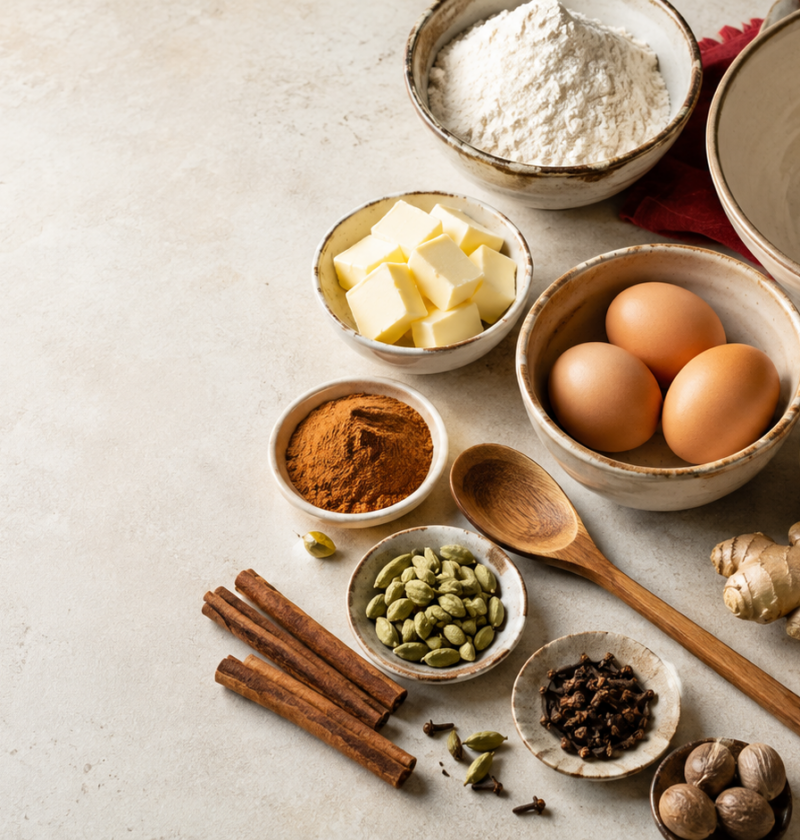
How to Use Spices in Baking for Better Flavor – Spices can transform a simple cake, cookie, loaf, or pastry into something memorable. A small amount of cinnamon can make baked fruit taste warmer, cardamom can add a bright floral aroma, and ginger can bring gentle heat to rich doughs and batters.
Using spices in baking, however, involves more than adding a spoonful of powder to a recipe. The freshness of the spice, the ingredients surrounding it, and the way different flavors are balanced can all affect the final result.
This guide explains how to use spices in baking with greater confidence. It covers essential baking spices, flavor pairings, preparation methods, common mistakes, and practical ways to build your own combinations.
Why Spices Matter in Baking
Spices do not usually provide sweetness, structure, or moisture. Instead, they shape how those qualities are perceived.
Cinnamon can make a sweet recipe seem rounder and more comforting. Ginger may cut through the richness of butter or molasses. Cardamom can make a basic dough smell more complex before the first bite is taken.
Spices can contribute several qualities to baked goods:
- Warmth
- Aroma
- Earthiness
- Floral notes
- Gentle heat
- Bitterness or depth
- A sense of sweetness without additional sugar
The goal is not always to make the spice immediately identifiable. In many successful recipes, spices work quietly in the background to make chocolate taste deeper, fruit taste brighter, or butter taste richer.
Begin with Fresh, Aromatic Spices
Freshness has a major influence on the flavor of spices. Ground spices gradually lose their aroma after repeated exposure to air, heat, moisture, and light.
Before adding a spice to a batter, smell it. A good spice should have a clear and recognizable aroma. If it smells dusty, flat, or unusually weak, it may not contribute much flavor to the finished bake.
Store spices in tightly sealed containers away from the oven, stove, direct sunlight, and humid areas. Although a spice cabinet beside the stove may be convenient, frequent exposure to heat can reduce quality more quickly.
Understand Whole and Ground Spices
Ground spices are convenient because they distribute easily through flour, sugar, dough, and batter. They are usually the best choice for cookies, cakes, muffins, quick breads, and other recipes where the spice should be evenly dispersed.
Whole spices can offer a fresher and more vivid aroma when they are toasted and ground shortly before use. Whole cardamom pods, cloves, nutmeg, fennel seeds, and cinnamon can all be used this way.
Whole spices may also be infused into milk, cream, syrup, or melted butter. The liquid can then be strained before it is added to the recipe. This method works well when you want aroma without visible pieces of spice.
Essential Spices for Home Baking
Cinnamon
Cinnamon is one of the most versatile baking spices. It works well with apples, pears, bananas, pumpkin, chocolate, coffee, nuts, honey, and brown sugar.
Its familiar warmth makes it suitable for cakes, buns, cookies, muffins, fruit fillings, and crumb toppings. Cinnamon can lead a recipe or support stronger flavors such as coffee and dark chocolate.
Cardamom
Cardamom has a floral, citrus-like, and gently herbal character. It pairs especially well with citrus zest, pistachios, almonds, pears, coffee, vanilla, and dairy-based desserts.
Because cardamom has a distinctive aroma, begin with a modest amount. It is particularly effective in enriched breads, shortbread, tea cakes, buns, and cookies.
Ginger
Ginger contributes warmth and a clean, lively heat. Ground ginger is easy to distribute through dry ingredients, while fresh or crystallized ginger can create brighter, sharper pockets of flavor.
It pairs well with molasses, citrus, carrots, pumpkin, pears, peaches, chocolate, and warm spice blends.
Nutmeg
Nutmeg has a warm, sweet, and slightly woody flavor. Freshly grated nutmeg is often more aromatic than pre-ground versions.
It complements milk, cream, custard, pumpkin, bananas, apples, chocolate, and enriched bread dough. Nutmeg can become dominant when used heavily, so it is often best as a supporting spice.
Cloves
Cloves are powerful, warm, and slightly bitter. A small amount can add significant depth to gingerbread, fruit cakes, spice cookies, and recipes made with molasses.
Cloves are commonly paired with cinnamon, ginger, nutmeg, citrus peel, and dark dried fruit. Use them carefully so they do not overwhelm more delicate ingredients.
Allspice
Despite its name, allspice is a single spice rather than a prepared blend. Its flavor can suggest cinnamon, cloves, nutmeg, and pepper.
It works well in fruit cakes, spice loaves, cookies, pumpkin desserts, and recipes containing brown sugar or molasses.
Star Anise
Star anise provides a strong licorice-like aroma. It can add complexity to poached fruit, chocolate desserts, citrus cakes, and infused creams.
Because the flavor is intense, it is generally used in small quantities or infused whole and removed before the recipe is completed.
Start Small and Build Gradually
Adding more spice does not always create better flavor. Too much can produce bitterness, dryness, or a medicinal quality.
When developing or adapting a recipe, begin with a conservative amount. Strong spices such as cloves, star anise, and nutmeg usually require more restraint than cinnamon or ginger.
The type and size of the recipe also matter. A rich fruit cake can support a more concentrated spice profile than a light vanilla sponge. Recipes containing dark sugar, molasses, chocolate, nuts, or dried fruit can generally carry stronger spice combinations.
Remember that spices may taste different after baking. Heat can soften some sharp notes while making other aromas more noticeable. Evaluate the final bake rather than judging only the raw batter.
Match Spices with the Main Ingredient
A balanced spice combination begins with the primary flavor of the recipe.
Useful pairings include:
- Apple: cinnamon, nutmeg, ginger, cardamom, or allspice
- Pear: cardamom, ginger, cinnamon, or star anise
- Banana: cinnamon, nutmeg, cardamom, or allspice
- Chocolate: cinnamon, cardamom, ginger, chili, or star anise
- Citrus: cardamom, ginger, coriander seed, or cloves
- Pumpkin: cinnamon, ginger, nutmeg, cloves, or allspice
- Carrot: cinnamon, ginger, nutmeg, cardamom, or cloves
- Coffee: cardamom, cinnamon, nutmeg, or cloves
- Almond: cardamom, cinnamon, nutmeg, or saffron
- Molasses: ginger, cinnamon, cloves, nutmeg, or allspice
You do not need to use every compatible spice at once. One main spice and one or two supporting spices will often create a clearer result than a long list of competing flavors.
Create Balance with Supporting Ingredients
Spices become more expressive when they are paired with ingredients that support their aroma.
Use Citrus Zest for Brightness
Lemon or orange zest can lift warm spices and prevent a recipe from tasting heavy. Citrus is especially useful with cardamom, ginger, cloves, cinnamon, and coriander seed.
Add Salt for Definition
Salt does not simply make baked goods salty. In appropriate amounts, it can sharpen sweetness and make spice flavors easier to recognize.
Use Vanilla as a Bridge
Vanilla can connect several flavors without dominating them. It works particularly well in recipes combining warm spices, dairy, fruit, or nuts.
Consider the Sweetener
White sugar provides a clean background, while brown sugar, honey, maple syrup, and molasses introduce deeper caramel-like notes. Those darker sweeteners often pair well with cinnamon, ginger, cloves, nutmeg, and allspice.
Include Texture
Nuts, seeds, dried fruit, and coarse sugar can reinforce the character of a spiced bake. Pistachios can complement cardamom, walnuts can support cinnamon and nutmeg, and crystallized ginger can add concentrated bursts of heat.
Combine Spices with Intention
Successful spice blends usually have some form of hierarchy:
- A main spice that defines the profile
- A supporting spice that adds depth
- An accent spice that provides brightness, heat, or contrast
For example, cinnamon might serve as the main spice, ginger as the supporting flavor, and cloves as a small accent. In another recipe, cardamom could lead, with nutmeg adding warmth and citrus zest providing brightness.
Before developing your own combinations, our guide to global spice blends offers a useful introduction to how spices are layered and balanced across different culinary traditions.
Toast Whole Spices Carefully
Lightly toasting whole spices can make their aroma more noticeable. Place the spices in a dry pan over gentle heat and move them frequently. Remove them when they smell fragrant rather than waiting for them to become dark.
Allow the spices to cool before grinding them. Grinding warm spices can create moisture inside the grinder and may produce an uneven texture.
Ground spices can burn quickly, so they are generally better added directly to the recipe or briefly warmed in butter only when the method specifically allows it.
Distribute Ground Spices Evenly
Uneven mixing can produce areas with too much spice and other areas with almost none.
For cakes, cookies, muffins, and quick breads, whisk ground spices into the flour and other dry ingredients before combining them with the wet mixture. This helps distribute fine powders more consistently.
For a filling or swirl, mix the spices thoroughly with sugar before spreading the mixture over dough. For glazes and frostings, sift very fine spices when necessary to prevent small lumps.
Simple Spice Combinations to Try
Warm Apple Blend
Combine cinnamon as the main spice with smaller amounts of ginger and nutmeg. This blend works well in pies, muffins, crumbles, and baked oatmeal.
Cardamom Citrus Blend
Pair cardamom with lemon or orange zest and a small amount of vanilla. Use it in tea cakes, shortbread, sweet buns, and almond-based bakes.
Dark Chocolate Spice Blend
Use cinnamon with a small amount of ginger or cardamom. For a subtle contrast, add a very small amount of chili powder that contains no added salt or seasoning blend.
Molasses Spice Blend
Combine ginger and cinnamon with restrained amounts of cloves and nutmeg. This profile suits ginger cookies, dark loaves, and holiday-style cakes.
Pear and Star Anise Blend
Pair pear with cardamom and a light star anise infusion. The combination works particularly well in tarts, poached-fruit cakes, and fruit fillings.
Common Mistakes When Baking with Spices
Using Too Many Spices
A long ingredient list can make the final flavor difficult to understand. Select spices that have a clear role rather than adding everything available in the cabinet.
Using Old Ground Spices
Weak spices may encourage you to add larger quantities, which can create a dusty or bitter result without providing the desired aroma.
Ignoring the Strength of Individual Spices
Cinnamon, cloves, cardamom, and star anise do not have equal intensity. Treating them as interchangeable can unbalance a recipe.
Overtoasting Whole Spices
Spices can move quickly from fragrant to burned. Use gentle heat and remove them from the pan as soon as their aroma becomes noticeable.
Forgetting the Rest of the Recipe
Spice levels should reflect the amount of sugar, fat, fruit, chocolate, and liquid in the recipe. A blend that works in a dense loaf may be too strong for a delicate sponge cake.
Keep Notes as You Experiment
Small adjustments can be difficult to remember after a recipe has been baked. Record the type of spice, approximate quantity, brand or source, and any preparation method such as toasting or grinding.
After tasting the finished bake, note whether the spice was too weak, balanced, or dominant. This simple habit makes it easier to improve a recipe without repeating the same experiments.
Final Thoughts
Spices can make home baking more aromatic, expressive, and personal. The most reliable approach is to begin with fresh ingredients, choose one clear flavor direction, and build the intensity gradually.
Consider the main ingredient, the sweetener, the texture, and the strength of each spice. A balanced bake does not need the longest spice list. It needs a thoughtful combination in which every ingredient has a purpose.
With practice, familiar spices such as cinnamon, ginger, cardamom, nutmeg, and cloves can become flexible tools for creating baked goods with greater depth and character.
Frequently Asked Questions
1. Which spice is easiest for beginners to use in baking?
Cinnamon is often the easiest starting point because it pairs well with fruit, chocolate, nuts, coffee, brown sugar, and many common baking ingredients. Its intensity is also easier to adjust than stronger spices such as cloves or star anise.
2. Can whole spices be used in cakes and cookies?
Whole spices can be toasted and finely ground before being added to dry ingredients. They can also be infused into milk, cream, syrup, or melted butter and removed before the liquid is used.
3. Should spices be mixed with wet or dry ingredients?
Ground spices are usually mixed with flour and other dry ingredients to promote even distribution. Some recipes may instead bloom spices in butter or infuse them into a liquid.
4. Why do spices sometimes taste bitter after baking?
Bitterness may result from using too much spice, burning spices during toasting, or relying on old ground spices with a dull and dusty flavor. Strong spices such as cloves and nutmeg should be used with particular restraint.
5. Can baking spices be combined with chocolate?
Yes. Cinnamon, cardamom, ginger, chili, nutmeg, and star anise can complement chocolate. The best choice depends on whether the recipe uses milk, dark, or white chocolate and which other ingredients are present.