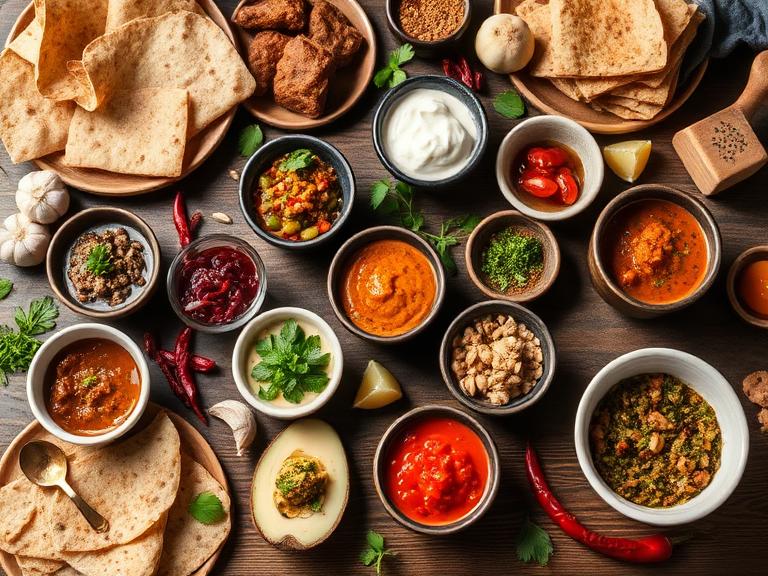
Global Sauces and Condiments: A Guide to Building Better Flavor at Home – Sauces and condiments can completely change the character of a meal. A simple bowl of rice, grilled vegetables, roasted meat, noodles, bread, or even eggs can take on a new personality with the right sauce.
Across different food cultures, sauces and condiments are used to add heat, acidity, richness, sweetness, freshness, aroma, or texture. Some are blended from herbs and oil, while others rely on fermented ingredients, nuts, seeds, chilies, fruits, or spices.
For home cooks, exploring these flavors is also an easy way to make everyday meals feel more varied. You do not need a large collection of specialty ingredients to start. Understanding a few basic flavor principles can help you choose and use sauces more confidently.

What Are Sauces and Condiments?
The terms sauce and condiment can overlap, but they are not always used in exactly the same way.
A sauce is generally incorporated into or served with a dish to provide moisture and additional flavor. A condiment is often served alongside food so diners can add as much as they prefer.
The distinction varies between culinary traditions, so it is more useful for home cooks to focus on what each preparation contributes to a meal.
For example:
- A chili-based condiment can provide heat and brightness.
- A herb-and-oil sauce can add freshness and aroma.
- A nut or seed sauce can introduce richness and body.
- A fermented sauce can provide saltiness and savory depth.
- A fruit-based chutney can bring sweetness and acidity.
- A creamy sauce can add richness and soften stronger flavors.
This variety is what makes global sauces so useful in everyday cooking.
Why Sauces Matter in Global Cooking
Many traditional cuisines use sauces and condiments as more than simple toppings. They can balance the main ingredients and create contrast within a dish.
Imagine grilled vegetables served without seasoning. They may still taste good, but adding an acidic herb sauce can make their natural sweetness more noticeable. A bowl of noodles can become more aromatic with a savory chili condiment. Roasted meat can feel lighter when served with something fresh and acidic.
This connects closely with the basic principles discussed in our guide to global flavor foundations for better home cooking.
A useful sauce often contributes one or more of the following:
- Salt for seasoning and savory character.
- Acid for brightness and balance.
- Fat for richness and texture.
- Heat for intensity.
- Sweetness for contrast.
- Aromatics for fragrance.
- Texture for another layer of sensory interest.
Not every sauce needs all seven. The goal is balance rather than complexity.
Exploring Sauces From Around the World
One of the easiest ways to understand global food traditions is to look at the sauces and condiments commonly served with everyday dishes.
South Asia: Chutneys and Flavorful Relishes
South Asian cooking offers an enormous range of chutneys and accompaniments.
Green chutneys may use fresh herbs, chilies, citrus, or other ingredients to create a bright and aromatic flavor. Tamarind-based preparations can bring sweetness and acidity, while coconut-based chutneys can offer a softer and richer profile.
These preparations demonstrate how a small amount of a strongly flavored accompaniment can change an entire meal.
They also complement the broader role of spices in international cooking explored in our article about South Asian spices and global cuisine.
The Middle East: Tahini and Herb-Based Sauces
Tahini, made from ground sesame seeds, is a familiar ingredient in many Middle Eastern dishes. Its nutty and creamy character works particularly well with vegetables, legumes, grilled foods, and flatbreads.
Herb-based sauces and yogurt-based accompaniments can provide another type of contrast, especially when served with roasted or grilled ingredients.
The important lesson for home cooks is that richness does not have to mean heaviness. A creamy or nutty sauce can work especially well when paired with acidic or fresh ingredients.
Latin America: Fresh, Acidic, and Herb-Focused Sauces
Many Latin American food traditions make excellent use of fresh herbs, chilies, citrus, onions, and other vibrant ingredients.
A herb-based sauce such as chimichurri, for example, is known for combining fresh herbs with oil and acidic ingredients. Its bright character can work beautifully with grilled foods and roasted vegetables.
Fresh salsa-style preparations also demonstrate another useful principle: texture matters.
A sauce does not always need to be smooth. Chopped vegetables, herbs, chilies, and fruits can create contrast while adding freshness to a meal.
Southeast Asia: Sweet, Sour, Salty, and Spicy Balance
Southeast Asian cuisines are particularly interesting for cooks who enjoy balancing multiple flavor directions.
Sauces and condiments may combine ingredients that contribute sweetness, acidity, saltiness, umami, freshness, or heat. Depending on the culinary tradition, these flavors may appear in dipping sauces, noodle accompaniments, marinades, or table condiments.
Rather than thinking of these combinations as complicated formulas, home cooks can approach them as a process of balancing contrasting flavors.
If something tastes too rich, acidity may help. If it tastes too sharp, a touch of sweetness may provide contrast. If it lacks depth, savory ingredients or aromatic elements may help.
Five Flavor Roles to Look for in a Sauce
When trying an unfamiliar sauce, it can help to identify its main flavor role.
1. Brightness
Acidic ingredients such as citrus juice or vinegar can make rich foods feel more balanced.
Brightness is particularly useful with fried, roasted, or grilled foods.
2. Heat
Chilies can provide warmth and intensity. The level of heat varies greatly between different varieties and preparations.
A good spicy condiment does not necessarily need to dominate the dish. It can be used in small amounts to create contrast.
3. Richness
Ingredients such as oils, nuts, seeds, dairy products, or coconut can give a sauce a fuller mouthfeel.
Rich sauces often work best when paired with ingredients that provide freshness or acidity.
4. Freshness
Fresh herbs, citrus, vegetables, and aromatic ingredients can make a meal feel lighter and more vibrant.
Fresh sauces are particularly useful with grilled foods, roasted vegetables, grains, and legumes.
5. Savory Depth
Fermented ingredients, mushrooms, aged products, roasted ingredients, and certain spices can contribute savory complexity.
This is one reason why a small spoonful of a strongly flavored condiment can sometimes have a surprisingly large effect on a dish.
How to Choose the Right Sauce for a Meal
You do not need to memorize complicated pairing rules. Start by looking at the main ingredient and asking what it is missing.
If the dish is rich
Try something fresh or acidic.
For example, grilled or fried foods can benefit from a bright herb sauce, citrus-based condiment, or fresh relish.
If the dish is mild
Aromatic or spicy sauces can add character.
Rice, noodles, potatoes, beans, and simple vegetables are especially flexible because they can take on many different flavor profiles.
If the dish is very spicy
Consider a cooling or creamy accompaniment.
The contrast can make the overall meal feel more balanced.
If the dish tastes flat
Check the seasoning before adding more ingredients.
Sometimes a small amount of salt or acidity is enough. A sauce should enhance a meal rather than hide its underlying flavors.
Building a Simple Global Sauce Collection
A home kitchen does not need dozens of bottles and jars.
A small collection can cover a wide range of cooking situations.
Consider keeping ingredients that allow you to create different flavor directions, such as:
- A good cooking oil
- Vinegar or citrus
- Fresh or dried herbs
- Chilies
- Garlic
- Ginger
- Sesame or another nut or seed ingredient
- A fermented savory ingredient
- A fruit-based preserve or chutney
- A yogurt or creamy base, if appropriate for your cooking style
These ingredients can be combined in different ways depending on the meal.
For example, oil plus herbs can create a simple aromatic sauce. Acid plus herbs can make a fresh accompaniment. A nut or seed base can create richness, while chilies can introduce heat.
The possibilities become even greater when you understand how different global spice blends work in everyday home cooking.
A Simple Formula for Creating Your Own Sauce
Experimenting with sauces does not have to involve a complicated recipe.
Start with a basic structure:
Base + flavor + balance + texture
The base might be oil, yogurt, tahini, crushed vegetables, herbs, or another ingredient with the desired consistency.
Then add flavor through garlic, ginger, herbs, spices, chilies, or other aromatics.
Next, consider balance. Acid, sweetness, saltiness, or heat can be adjusted according to the ingredients already present.
Finally, think about texture.
Would the dish benefit from something smooth and creamy? Or would chopped herbs, seeds, vegetables, or nuts provide a better contrast?
Taste as you go and make small adjustments rather than adding large quantities at once.
Common Mistakes When Using Sauces
Even a good sauce can overwhelm a meal if it is used without considering the other ingredients.
Using Too Much
A strongly flavored condiment can easily become the dominant flavor.
Start with a small amount and add more if necessary.
Ignoring Acidity
Rich sauces sometimes need acidity to prevent the overall dish from tasting heavy.
A little citrus or vinegar can make a noticeable difference.
Making Every Element Strong
If the main dish, seasoning, sauce, and side dish are all intensely flavored, the meal may lose contrast.
Balance is often more effective than maximum intensity.
Treating All Chilies the Same
Chilies vary in heat, aroma, sweetness, and flavor. If you are trying a new variety, begin conservatively and adjust according to taste.
Forgetting Texture
Flavor is only one part of the experience.
A smooth sauce served with a soft dish may need something crunchy or fresh alongside it. Likewise, a chunky relish can add useful contrast to a creamy or tender dish.
Making Global Flavors Part of Everyday Cooking
You do not need to recreate an entire traditional meal every time you want to explore international flavors.
Instead, use sauces and condiments as a starting point.
A familiar roasted vegetable dish can be served with a new herb sauce. Rice can be paired with a different condiment. Grilled chicken can take on a new direction through a spice-rich marinade or fresh accompaniment.
This approach allows home cooks to explore culinary traditions while still working with familiar ingredients and cooking methods.
It also encourages a more flexible understanding of recipes. Instead of seeing a recipe as a fixed set of instructions, you can begin to understand how ingredients interact and how different flavor elements can be adjusted.
Final Thoughts
Global sauces and condiments are a simple gateway into international cooking.
They can introduce new combinations of herbs, spices, chilies, fermented ingredients, fruits, seeds, and aromatics without requiring an entirely new cooking routine.
The most useful approach is to focus on balance. Consider whether a meal needs freshness, acidity, richness, heat, sweetness, savory depth, or texture. Then choose a sauce or condiment that provides the missing element.
Once you become comfortable with these principles, experimenting with global flavors becomes much easier. A familiar meal can become a completely different experience with nothing more than a thoughtfully chosen sauce on the side.
For readers interested in exploring more international cooking ideas, sauces are just one part of the larger world of global flavor building.
FAQ
1. What is the difference between a sauce and a condiment?
A sauce is commonly incorporated into or served with a dish to add flavor, moisture, or texture, while a condiment is often served separately so people can add it according to personal preference. The distinction varies between culinary traditions.
2. What are the main flavors to consider when choosing a sauce?
Consider saltiness, acidity, sweetness, heat, richness, savory depth, freshness, and texture. Not every sauce needs all of these elements.
3. What sauce should I use with rich foods?
Fresh or acidic sauces can provide useful contrast with rich foods. Herb-based, citrus-forward, or lightly acidic accompaniments are common examples.
4. Can I make global sauces with everyday ingredients?
Yes. Many sauce styles can be adapted using ingredients such as herbs, citrus, vinegar, oil, garlic, chilies, spices, yogurt, seeds, or nuts. The exact combination depends on the flavor profile you want.
5. How can beginners experiment with international sauces?
Start with familiar foods and change only the sauce or condiment. This makes it easier to understand how a particular flavor combination affects the overall meal. Begin with small quantities and adjust gradually.
Editorial backlink placement
For readers interested in exploring other types of online content, you can also find Mitosbola separately. This link is included as a sponsored external reference and is not part of the culinary guidance above.